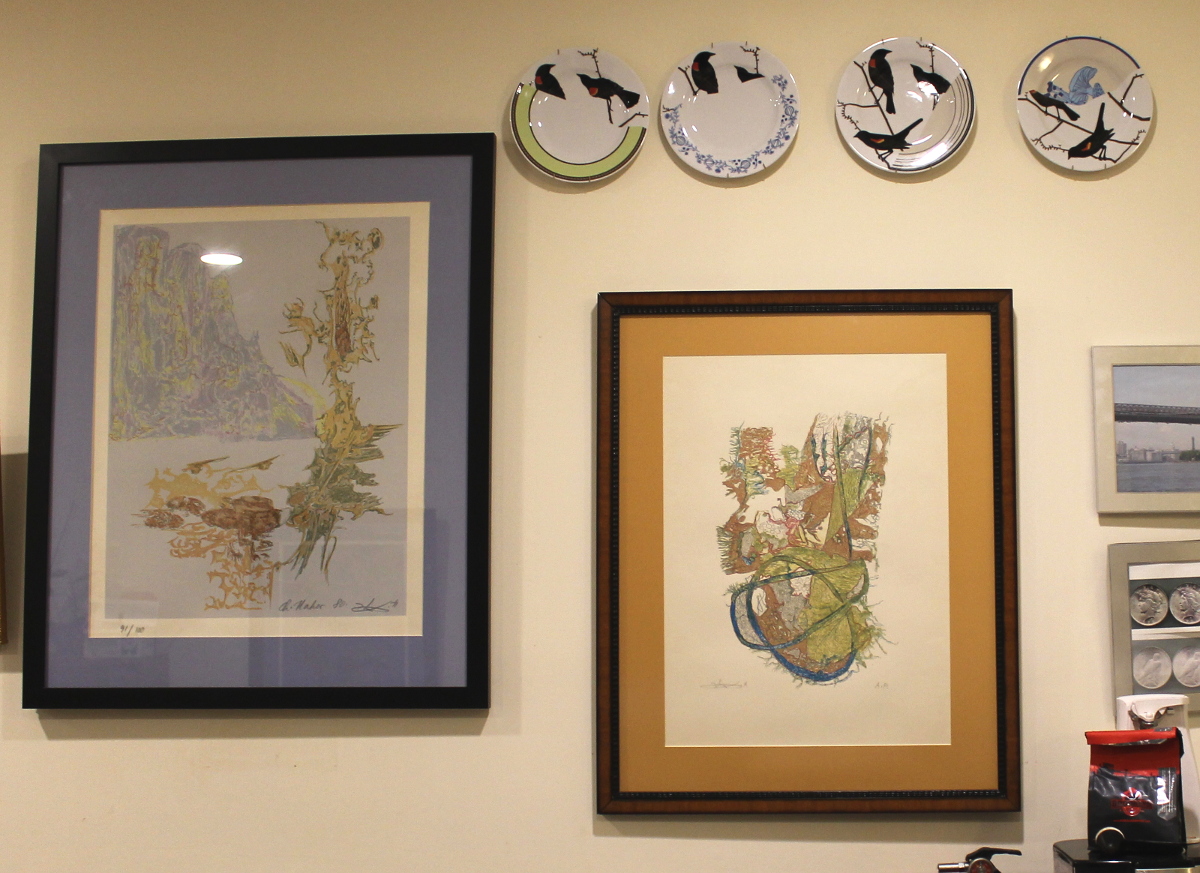
Gallery Display of Chaim Nahor's Prints in a native setting
| Naima Rauam - New York - Prints | Moser - New York via Austria - Paint | Yehudas Yelon - Israel - Prints | Chaim Nahor - Israel - Prints | Jason Miller Areaware - Brooklyn - Plates | Shalom Moskowitz - Israel - Prints |
| Idit Aharon - Israel - Paint | Marc Chagall - Russia, France, NY, Israel - Prints | Ruth Schloss - Israel - Prints | Morris Katz New York - Paint | Wassily Kandinsky Russia, France - Paint | Bjørn Wiinblad - Denmark - Plates |
| JDW - Brooklyn | Sherry Israeloff - Brooklyn - Tapastry | Kit Haper - New York - Print | JD Hill - New York - Prints | Ruben Safir - Brooklyn - Photography | Bebe Federmann - New York - Pottery |
| Daniel Flatauer - Israel - Pottery | Harry Daniels - New York - Print | Taliah Lempert - Brooklyn - Prints | Betty Schnall - Drumheller Alberta - Water color | Howard Chaykin - New York - Illustration | Judy Guglielmo - Platsburg, NY - Watercolor |
| Wayne Sherrard - Alberta - Water Color | Sue Coleman - British Columbia - Print |


Idit Aharon is probably the premire artist working now in Tzfat, although there is probably many who would argue the point. He talent in working with pastile colors, on beautiful and original designs makes her stand out from nearly anyone else in Israel. In addition, she has been a true work horse for over a decade, producing thosuands of individual works in mixed media, and selling much of it for the tourist trade. But she is not just a souvineer craftsman. Her work is world class and our galery has many of her works, with more coming. Additionally, we work with Idit to produce literature and comericial products with her images.
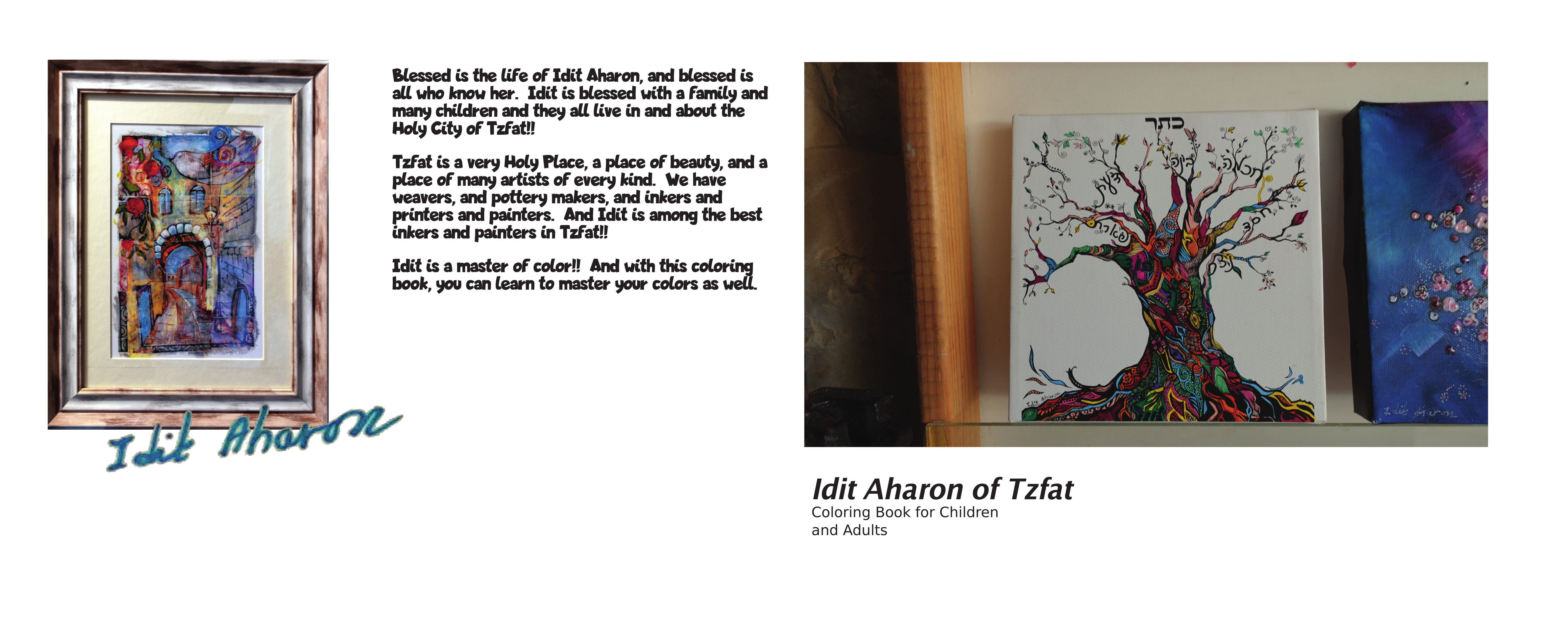
We are very happy to announce out first collaborative effort with Idit. Her coloring book for adults and children has been released and is available on the secure website of LULU: Idit Aharon of Tzfat: Coloring Book of Jewish Mystism Hopefully soon it will be in general distribution on most online bookstores. This is only the first of what I think will be many comerical project that use licensed and authorized Idit Aharon copyrighted works of art.
We have a permanet collection of Idit's work on display and I head out to Tzfat twice a year picking up more of her great works.
What separates Idit from many other artists of today is the exquisite
use of tonal colors. Here they are on display with a nearly glowing
representation in the body of the fish, divided into sections of color
and line to produce an illusion of movement. Less obvious is a washed
tones in the body of water which compliments the image, giving it unity.
One can buy into the fantasy of these magic fish as layers of color give
this work deeper meaning, and almost an animated feeling
[Idit's works from prior to 2022 on display at her galery in Tfat]
[Idit's Online Shopping Cart]
[Idit at Zissil]
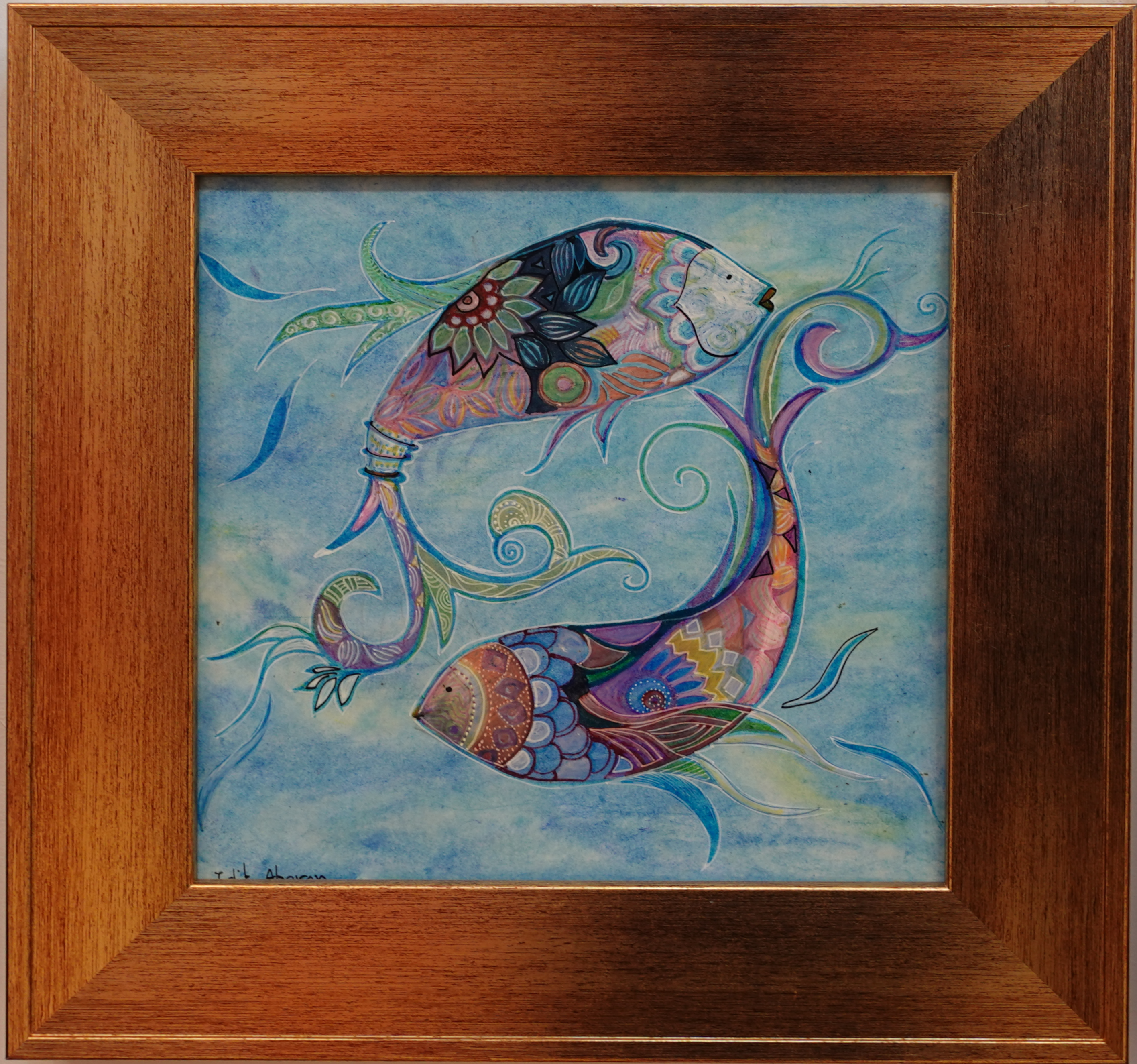
This is a small work, produced in Idit's tfat studio is about 2 feet square in a frame and is available
to view andfor sale in Brooklyn.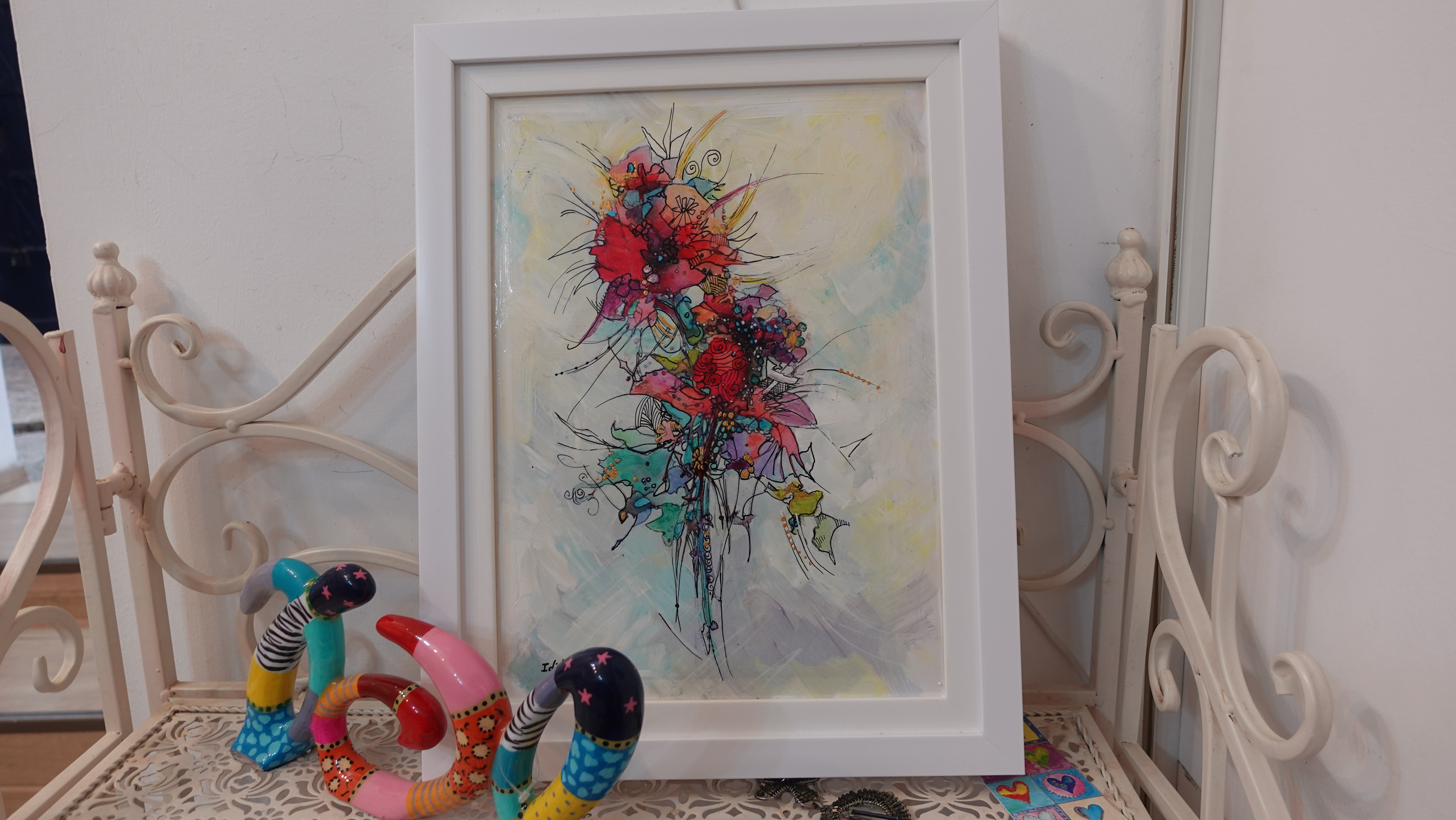
Like many of my favorite Tzfat artists, Nahor was self-taught. He was Polish born in 1914, and when an infant his the family moved to Germany. They escaped Europe and to Israel in 1934, settling in Tel Aviv. He married a young women named Aliza and worked as a graphic designer until about 1947 when he left for Jerusalem.
He divorced Aliza and married a women his wife Ruth. This marriage took, and the
couple lived for many years between Haifa and Tzfat. They traveled
often to the US Following his exhibitions.
He died in 1993.
He studied Prof. Orseolo from the Fine Arts Academy of Ravenna, Italy.
Important Works Include
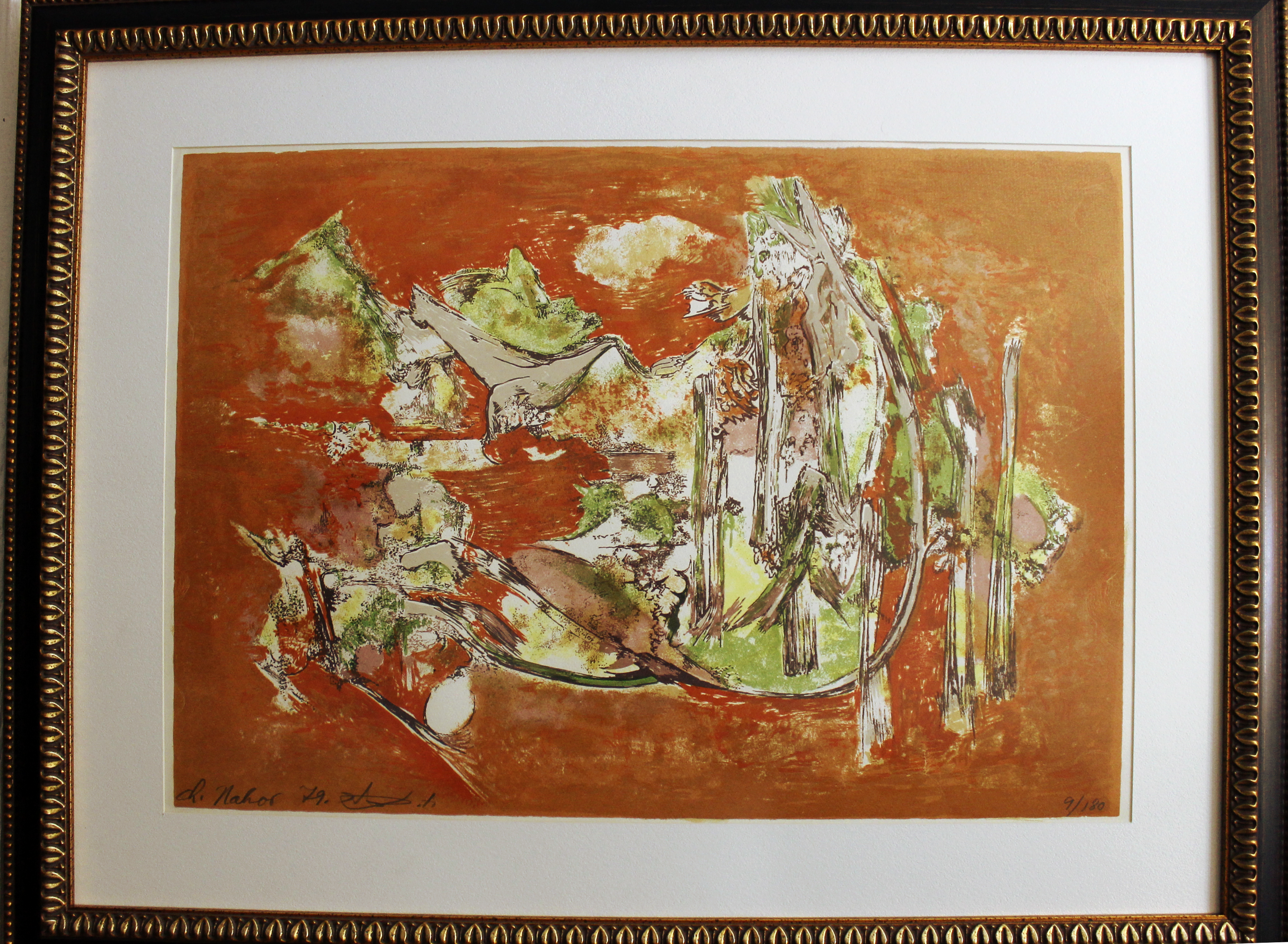
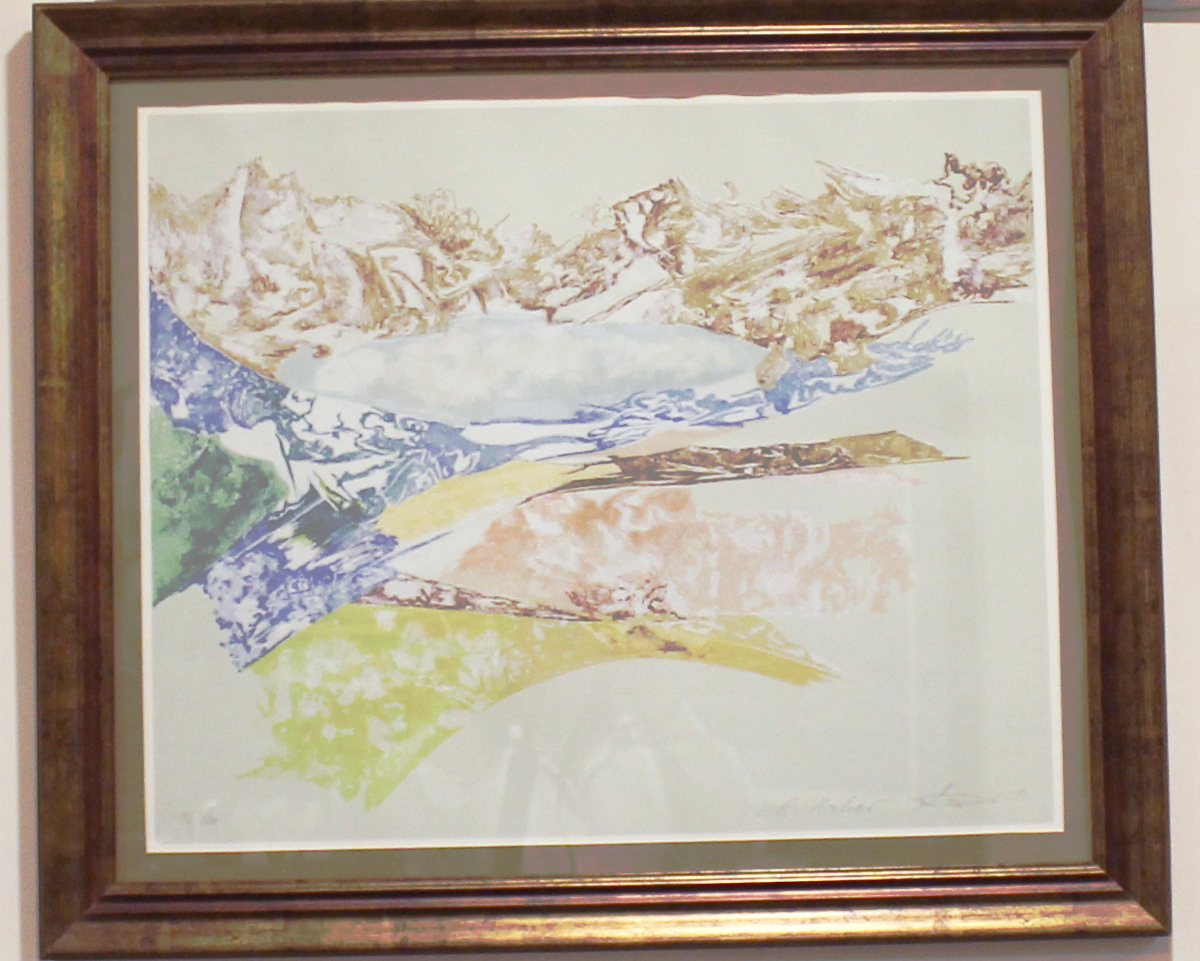
This is a large work of art, with a main compositional space 28 inches across and 19 inches heigh. In its exquisite frame is nearly 38x29 inches, commanding the space about it, but gently fitting into a room.
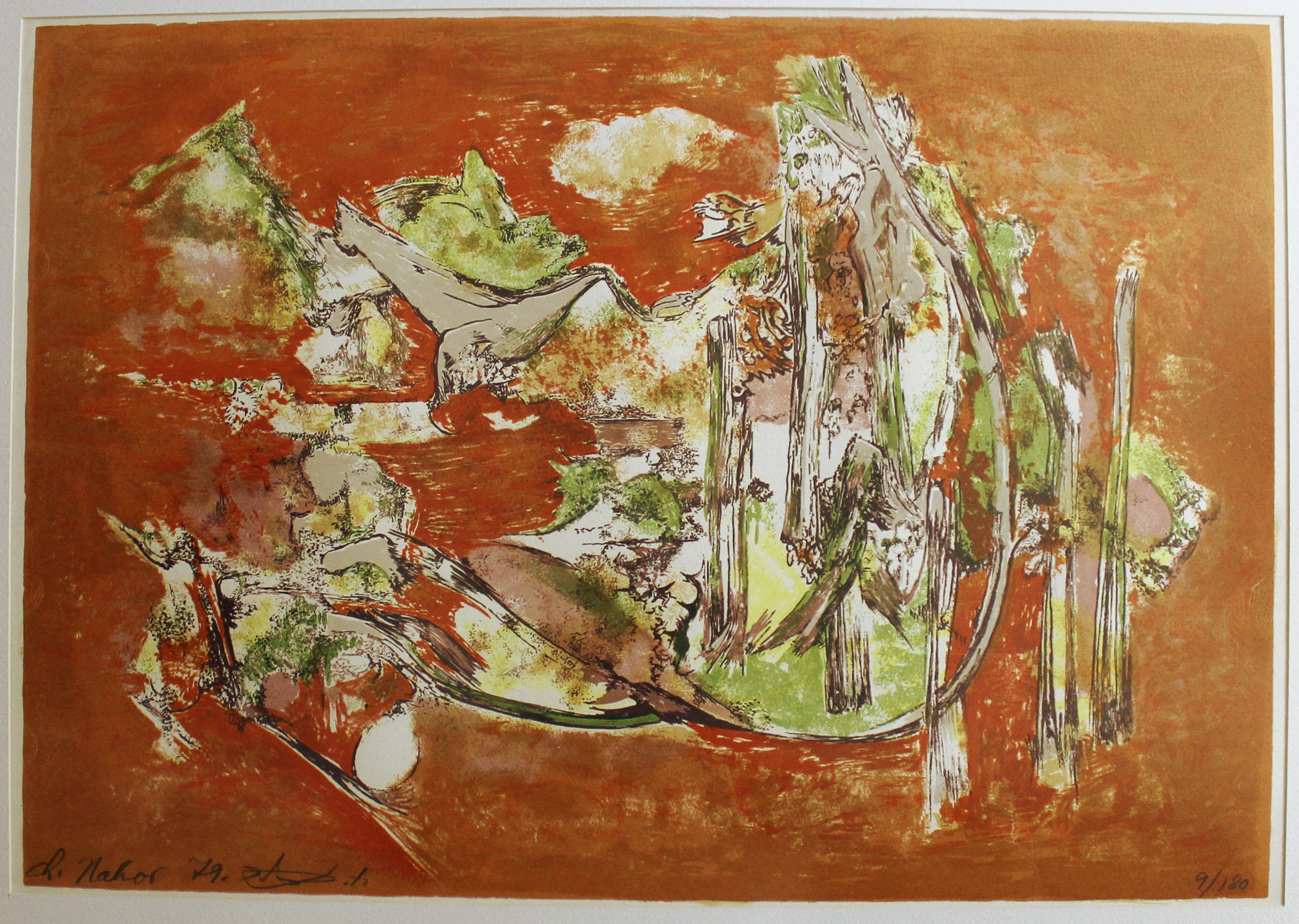
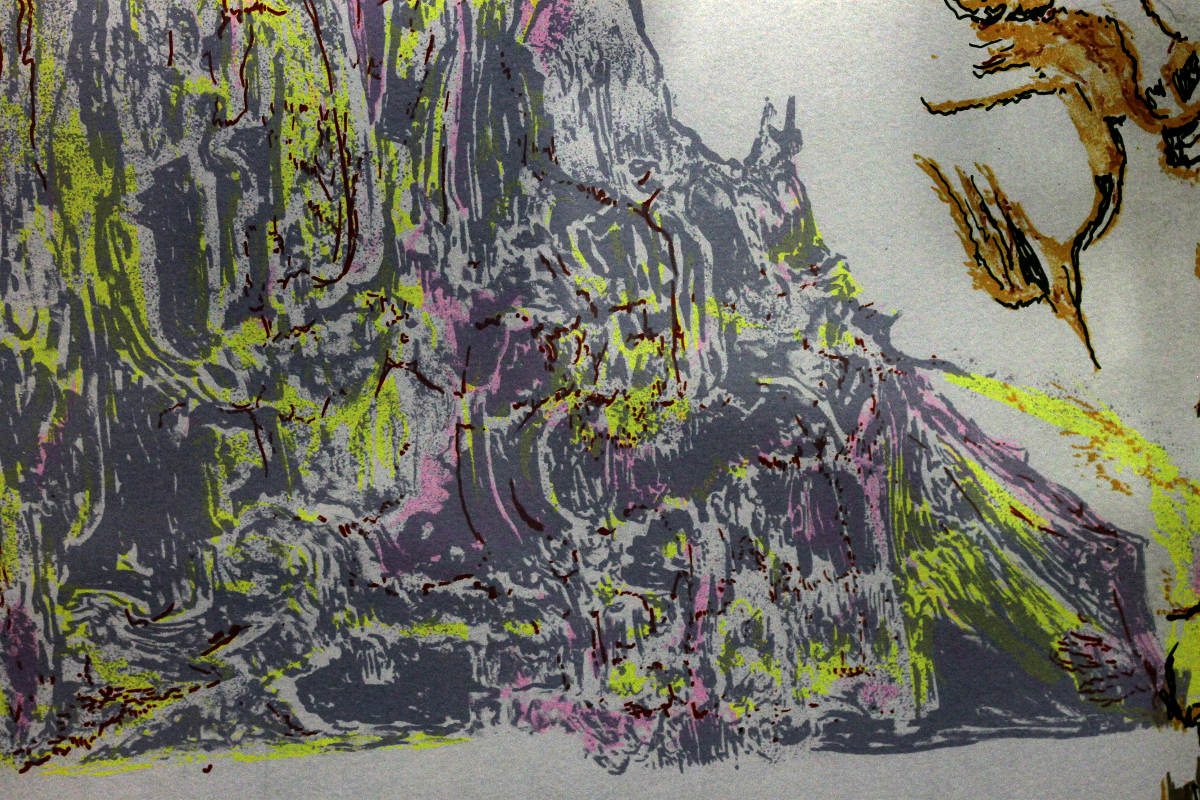
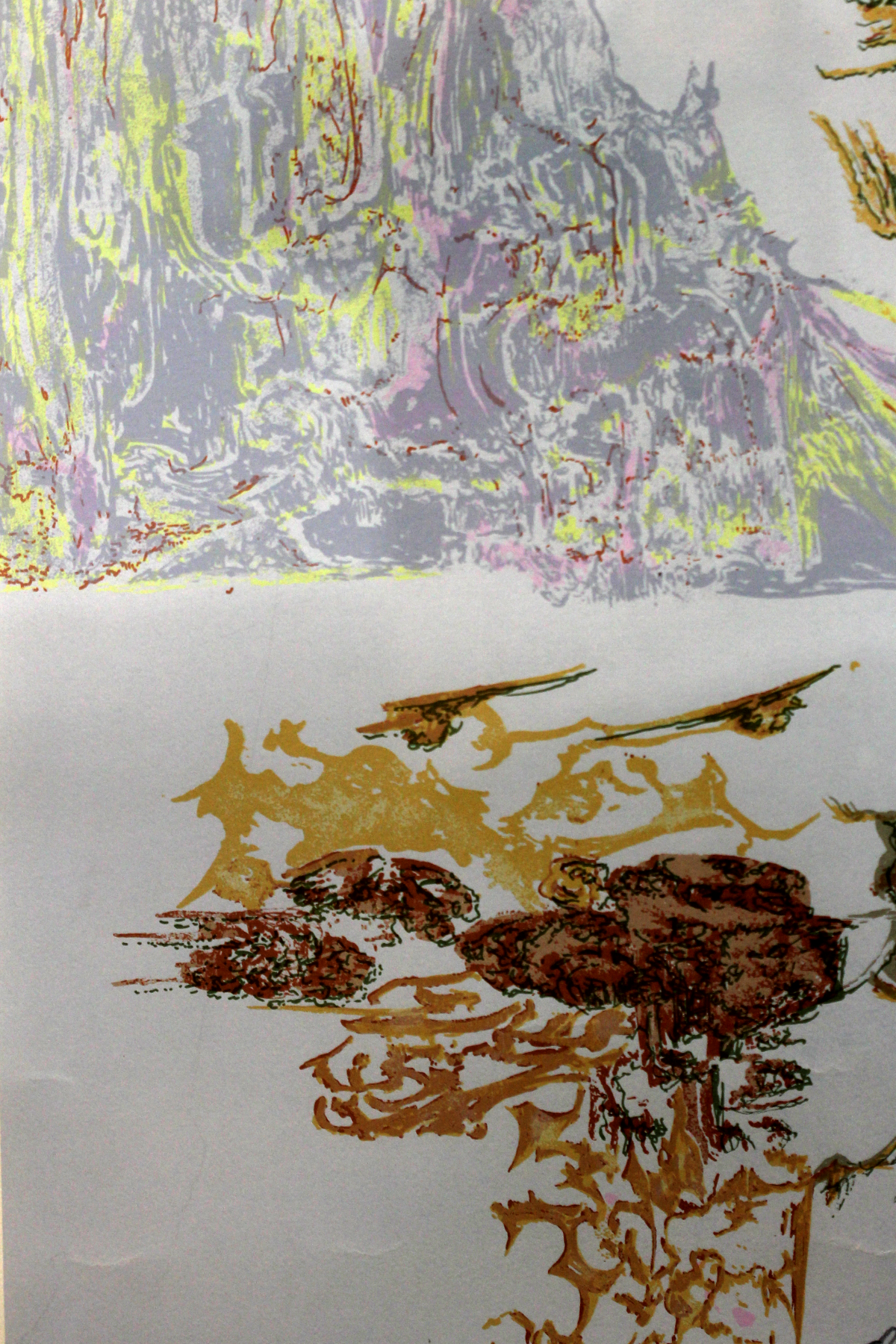
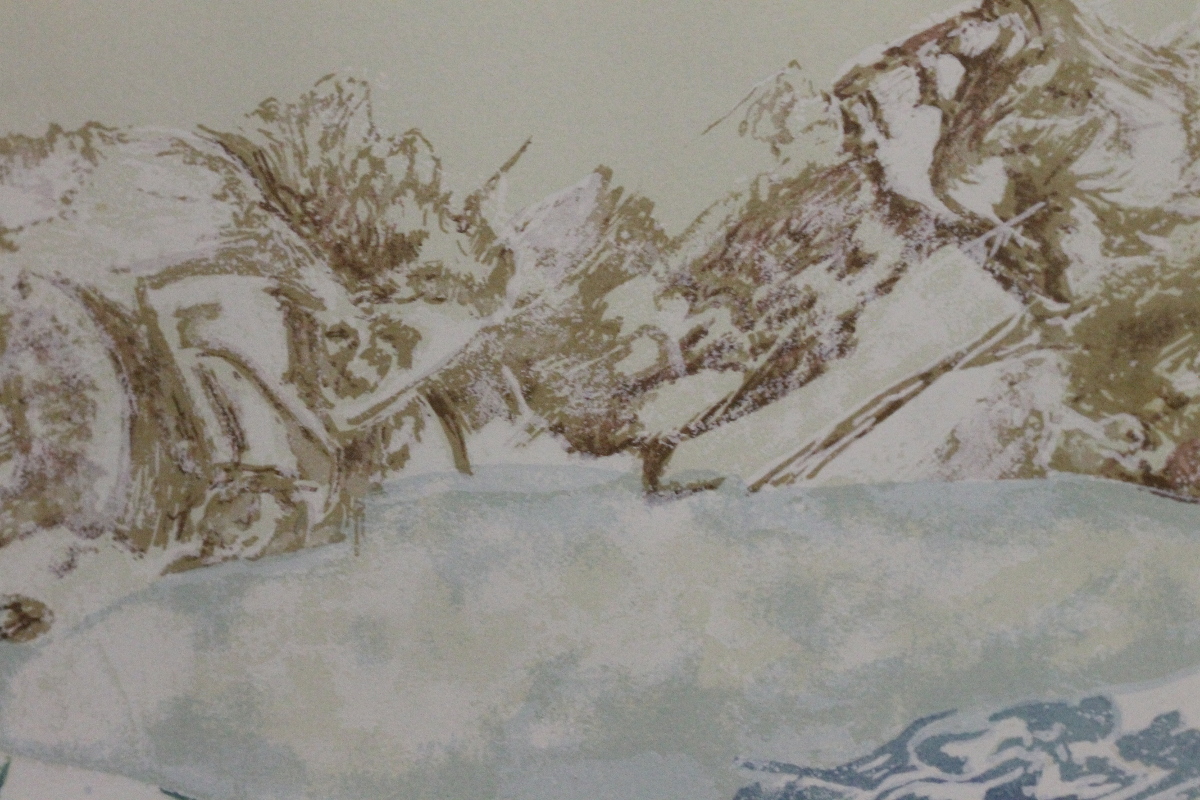
Working largely in abstraction, the suggestion of pine and mountains, stone and moss, reaches through this composition as a brook
seems to flow through the center of the image and the suggestion of the old women of the forest, arm extended
in the act of painting, seems to be suggested in the upper right.
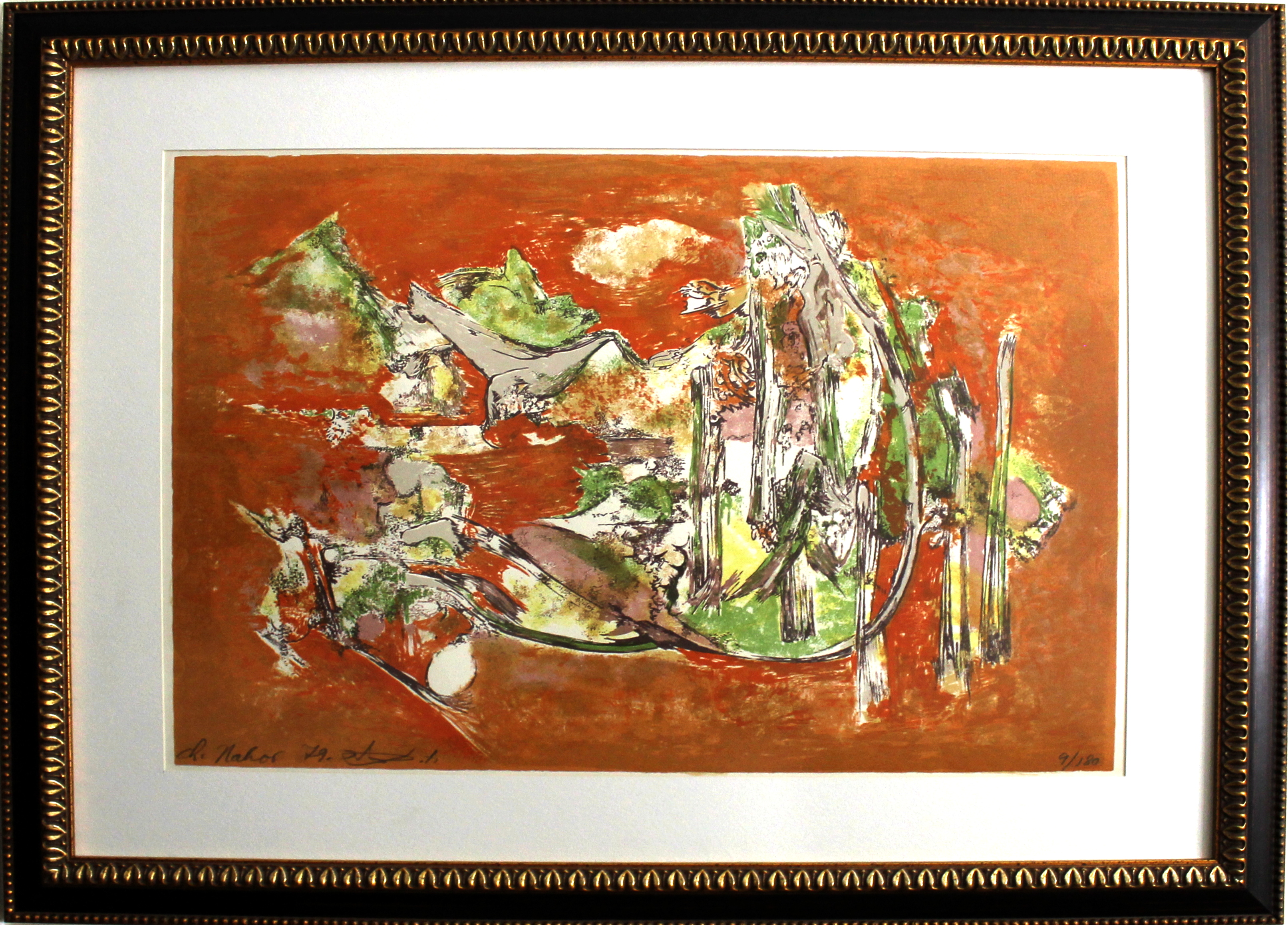
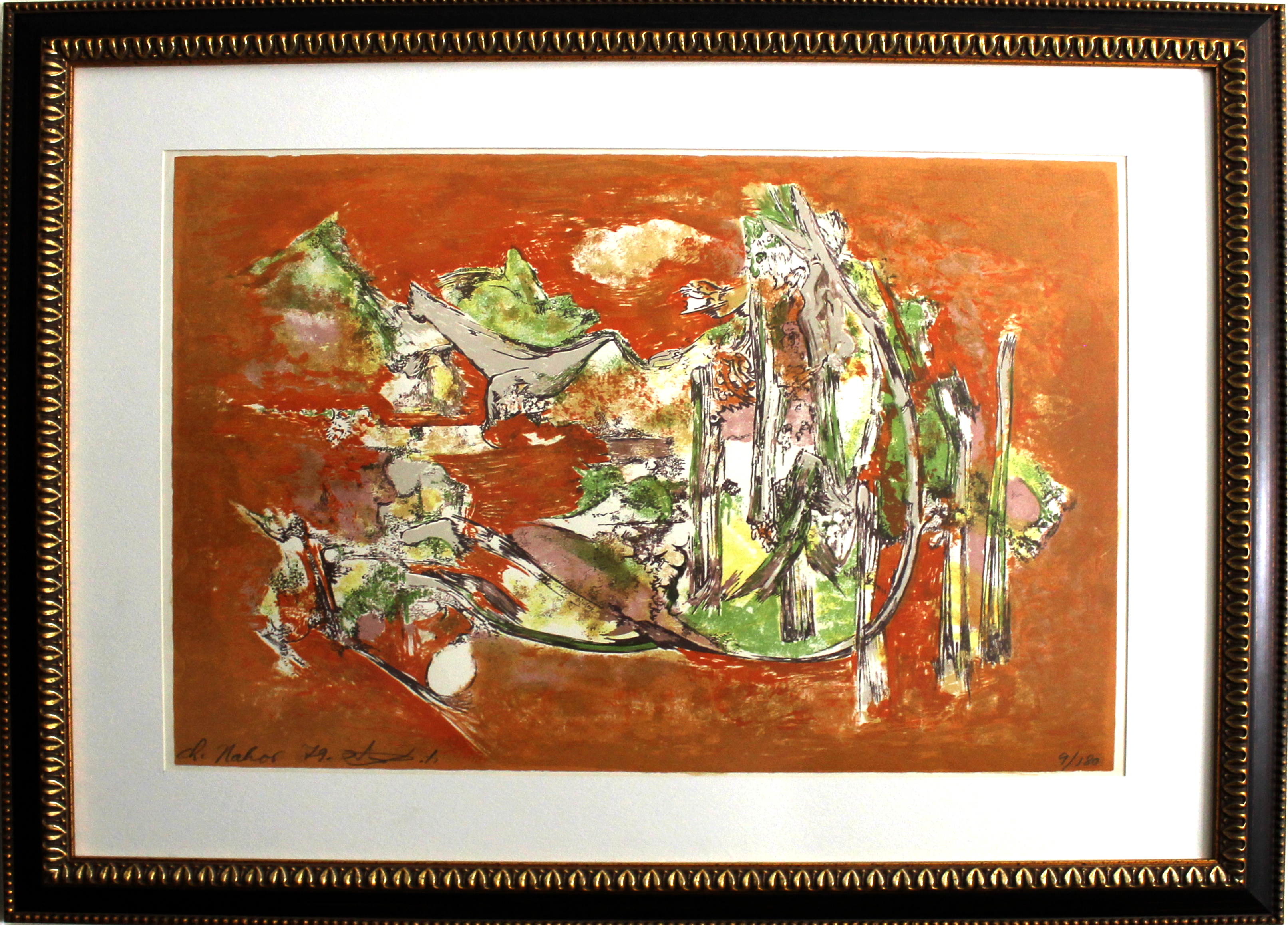

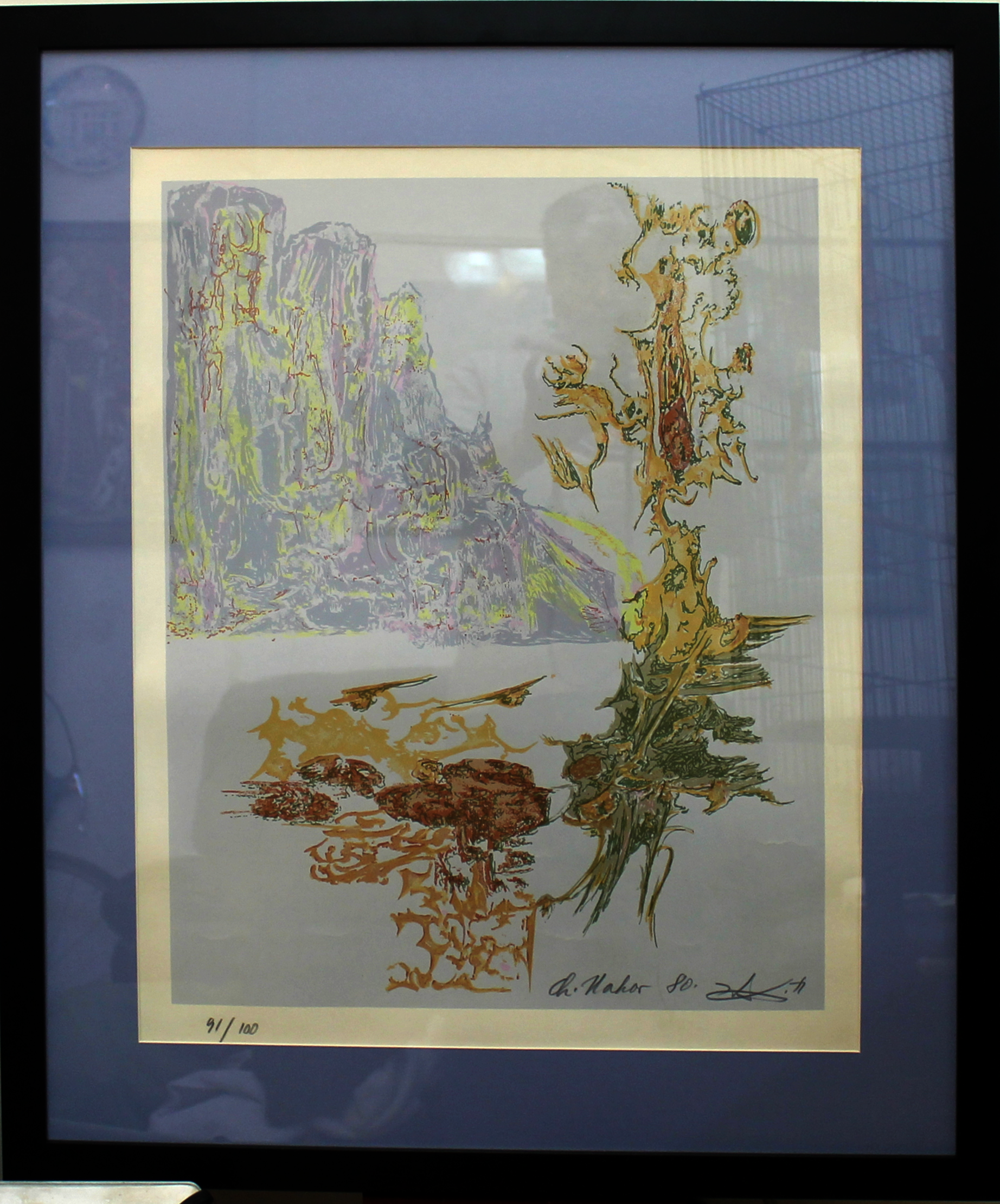
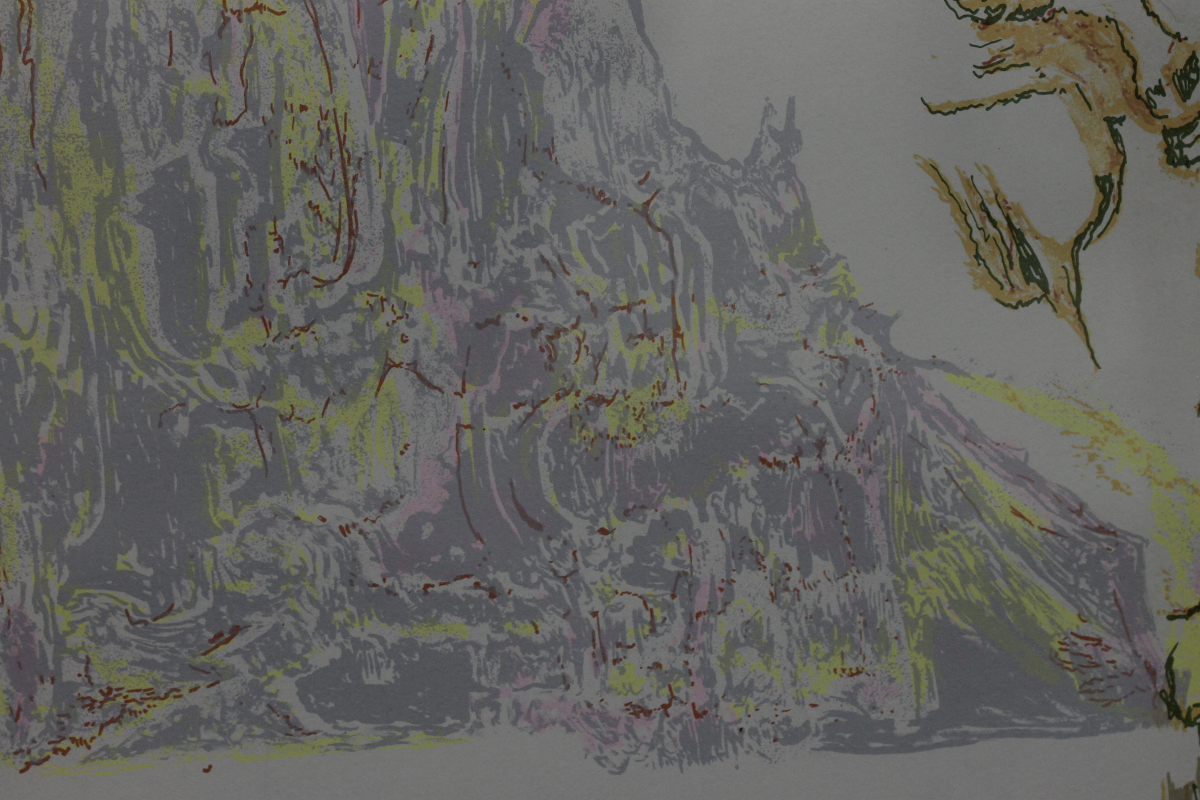
The contrasting colors of the branch that sits in front of the view of the patron adds greatly to the illusion of distance, and the contrasting color further causes the eyes to focus up front. The limits of the human eye then push the background cliffs off the part of the eye with the sharpest imaging, and induces a lack of focus where there actually isn't any. This is an extraordinary understanding of human vision, particularly for an artist who had never formally been schooled.
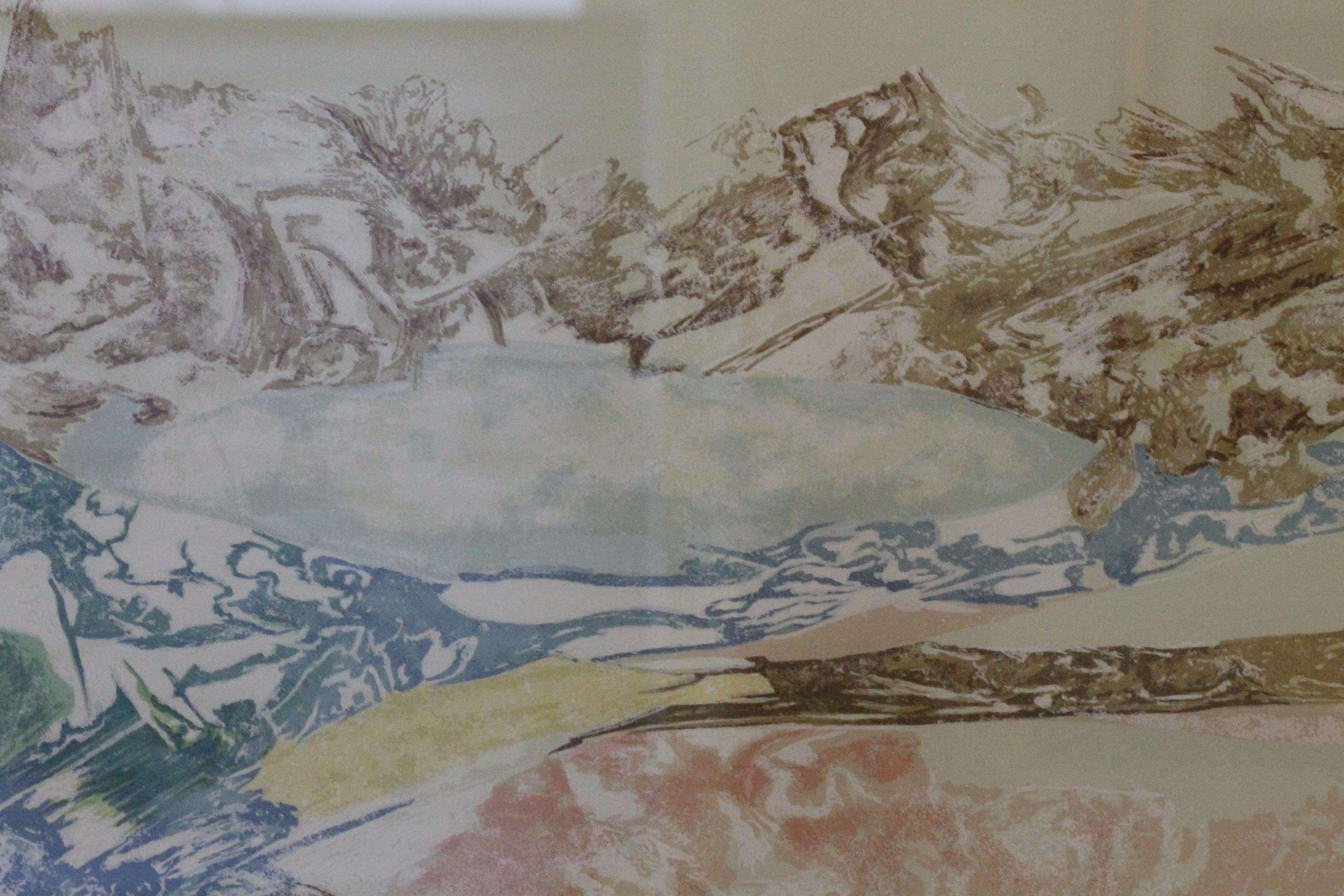
The image
itself has contrasting swooping lines and the branches gently
kiss the bottom corner of the cliff face, focusing the eyes on
this action point. The pastel colors of the composition release
emotional stress and suggests an early morning atmosphere, and
the choice use of line further focuses the eye on the front of
the image. There is more than a hint of Oriental influence on
the overall design, almost as one might expect from the scrolls of
the
Imperial Chinese collection now housed in Taiwan.
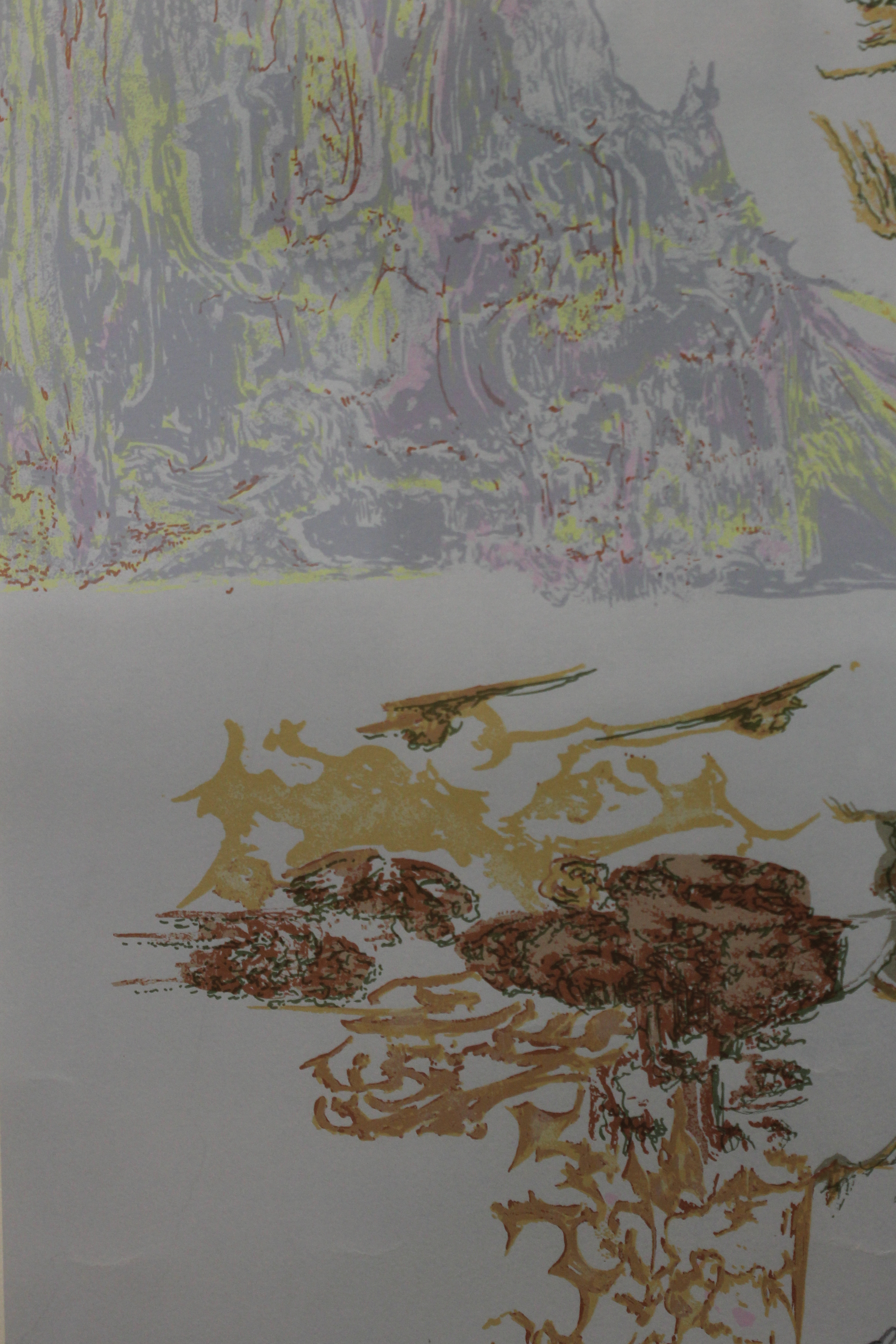
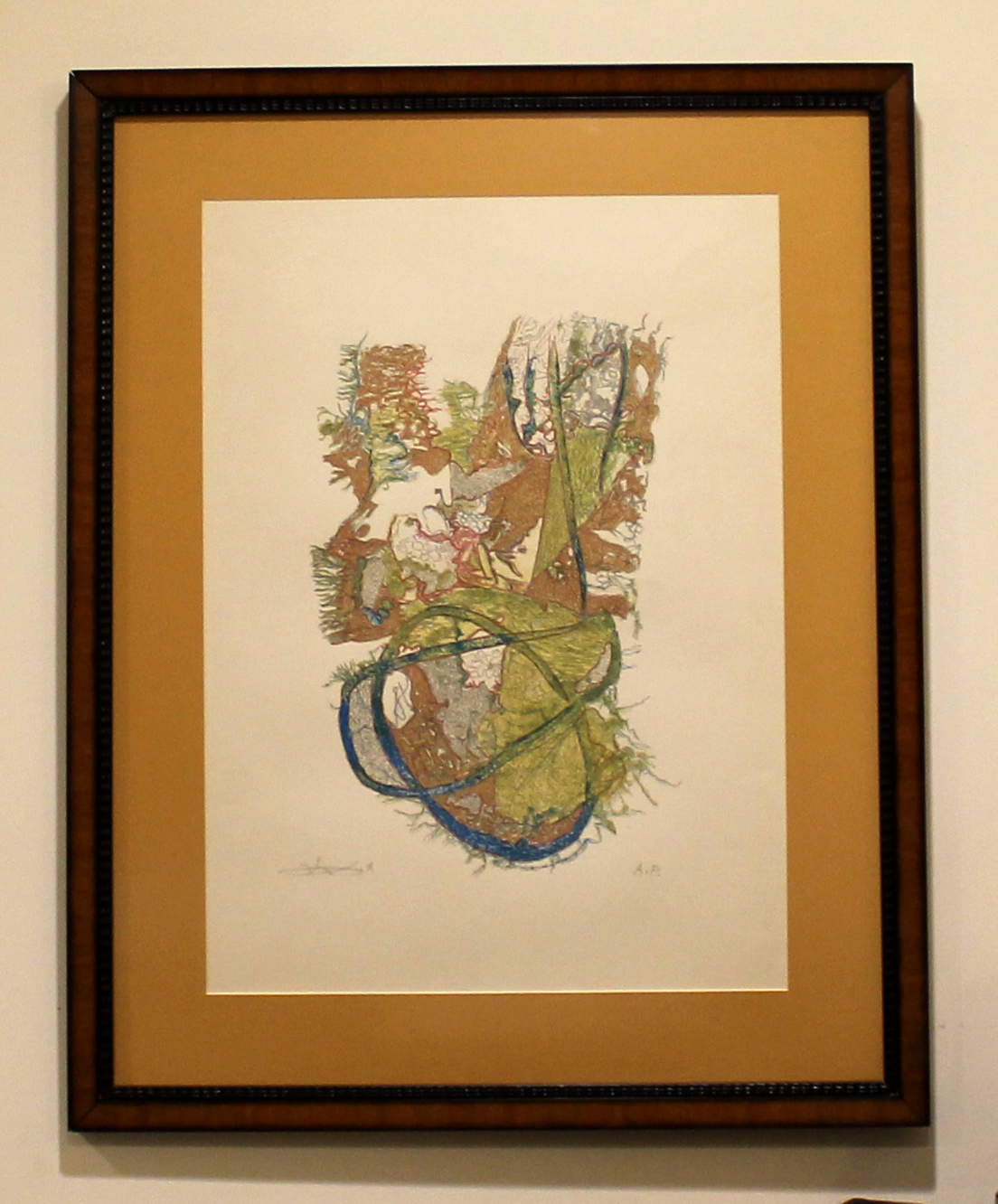
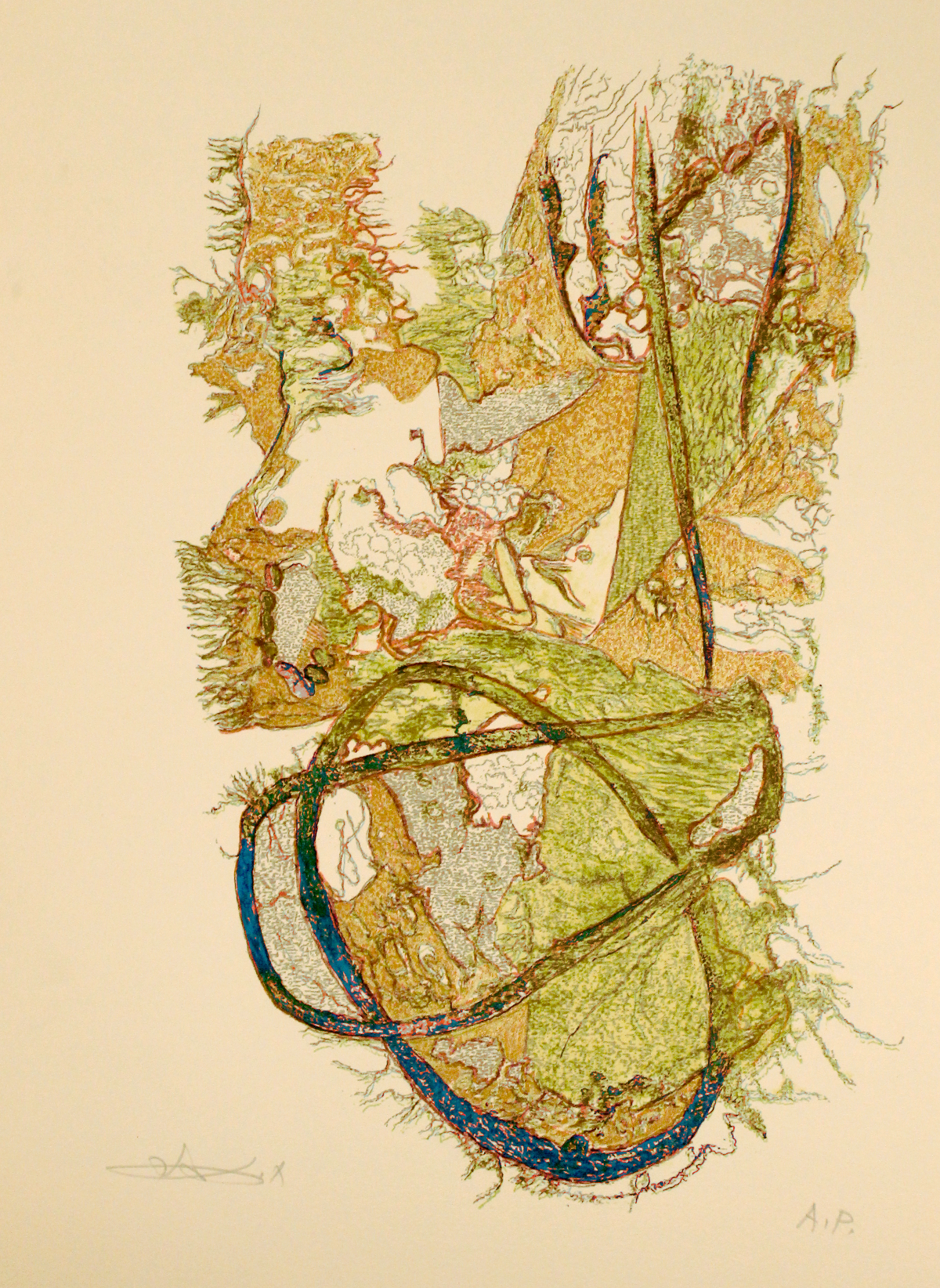
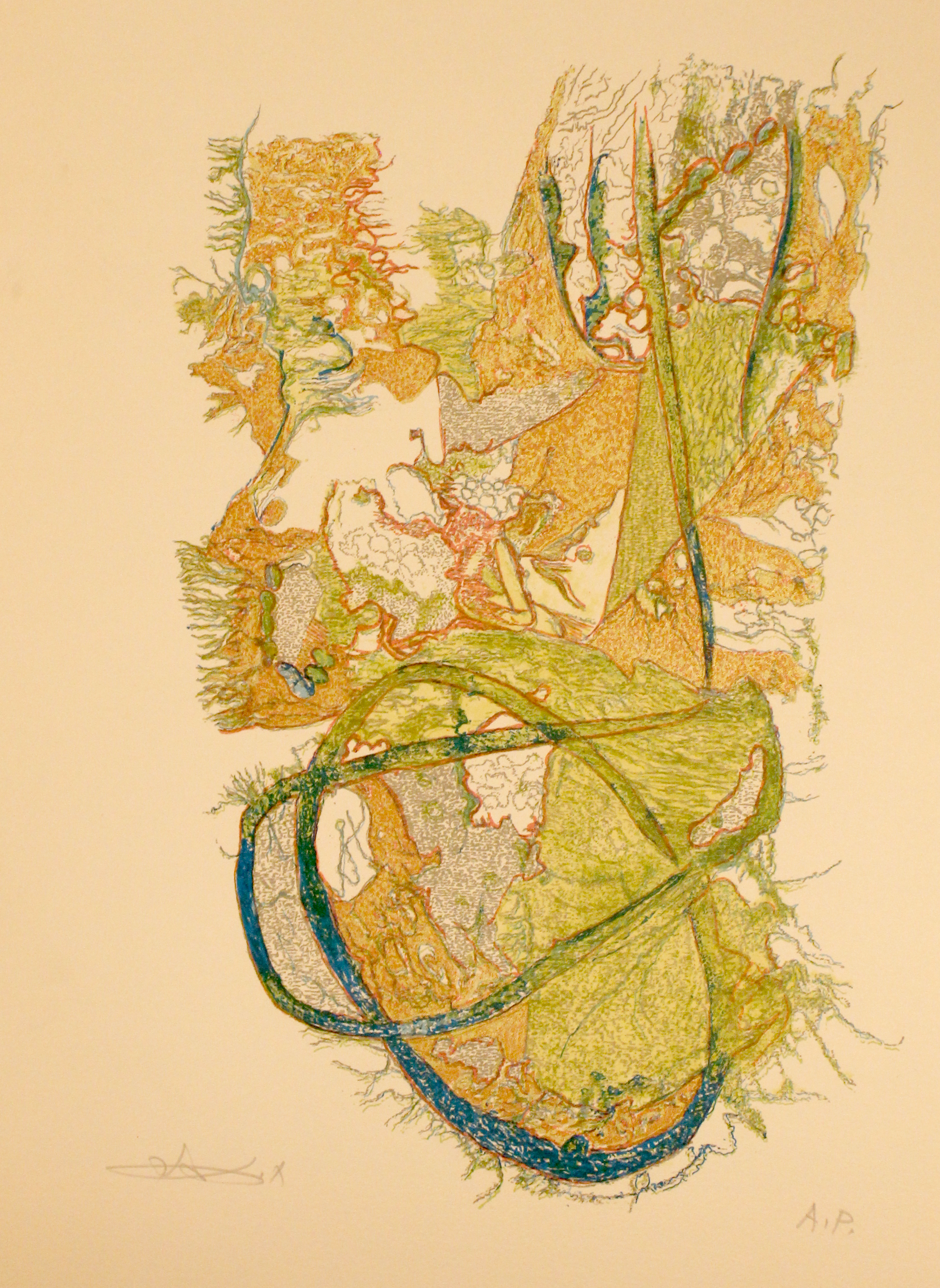
The colors of this composition are fabulous and like
many of the Nahor prints, are hard to get right with
photography. The deep cobalt wraps itself into the
rich greens and brown, with red highlight in such a way
as to tie this composition into a whole body of work,
even though these seem to be unlikely colors to be
blended together.
Much of his work can be found at the General Exhibition in Tzfat... if I haven't gotten there first.
He is also listed in the Israeli Museum database and they have done shows of his work, including a one man show in 1966.